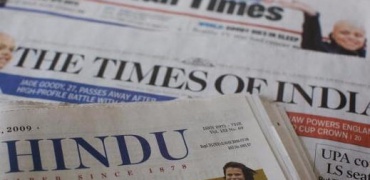
India ends 100% reliance on Chinese solar imports (First Post)
India’s Ministry of New and Renewable Energy (MNRE) announced that from June 2028, clean energy firms will be required to use domestically produced solar ingots and wafers, ending reliance on Chinese imports. This follows an earlier directive mandating the use of locally made solar cells from June 2026 in state‑run projects. India currently imports 100% of its solar ingots, wafers, cells, and polysilicon from China, making this policy shift critical for supply chain security. Companies such as Waaree Energies, Tata Power, and Indosol Solar have already proposed multi-billion‑rupee investments to expand domestic manufacturing capacity. The move aligns with India’s target to double non‑fossil fuel power capacity to 500 GW by 2030, with solar expected to play the largest role. Officials emphasized that the policy will ensure self‑reliance across the entire solar panel manufacturing chain, while also boosting employment and reducing import dependence.
War in Gulf threatens India’s USD $11 Billion Investments in Dubai (Forbes India)
Indian investments in Dubai’s real estate market, which surged nearly fivefold from ₹18,000 crore in 2021 to ₹85,000-90,000 crore in 2025 (USD $10.9B-11.5B), are now at risk due to the escalating Iran-Israel conflict. According to ANAROCK Research, Indian buyers-ranging from Bollywood stars like Shah Rukh Khan, Salman Khan, and the Bachchans to middle‑class families-have been key drivers of Dubai’s property boom. Luxury projects such as DAMAC Islands 2, launched by Alia Bhatt and Ranbir Kapoor, saw villas priced from ₹6.5 crore (USD $790K), while middle-class buyers invested in areas like Jumeirah Village Circle and Dubai Silicon Oasis. A Kotak Mahindra Bank survey ranks the UAE as the fifth most preferred migration destination for ultra‑wealthy Indians, with 13% choosing it after the US, UK, Canada, and Singapore. The ongoing Gulf war has already disrupted aviation and trade flows, raising concerns that property demand from Indian investors could slow sharply. Analysts warn that the conflict may reverse India’s Dubai property surge, which had become one of the most significant overseas real estate bets by Indian households and HNIs.
Iran attack on Qatar's Ras Laffan, world’s largest LNG hub, threatens India’s LNG and LPG supplies (Times of India)
Iran’s missile strikes on Qatar’s Ras Laffan LNG hub, which supplies 20% of global LNG, have destroyed 17% of Qatar’s LNG capacity for up to 5 years, according to QatarEnergy CEO Saad al‑Kaabi. India, which sources 40% of its LNG and nearly 90% of its LPG imports through the Strait of Hormuz, faces severe supply risks as the chokepoint has been rendered nearly impassable. The Ministry of External Affairs (MEA) spokesperson Randhir Jaiswal condemned the attacks, calling them deeply disturbing, while the Ministry of Petroleum and Natural Gas confirmed India is diversifying supplies from the US, Australia, West Africa, and Russia. Grant Thornton Bharat estimates that more than 60% of India’s crude imports originate from the Persian Gulf, and disruptions have already pushed Brent crude above USD $119 (INR ~9,900) per barrel, raising India’s import bill. Domestic refiners have increased LPG output by 36%, while India has secured 1 MMT of LPG from the US to offset shortages. Analysts warn that prolonged disruption could force Indian buyers into higher‑priced spot LNG cargoes, impacting fertilizer, power generation, and household cooking fuel.
Indian Government launches USD $59.7 Million RELIEF scheme for exporters hit by West Asia crisis (money control)
The Commerce & Industry Ministry has rolled out the RELIEF scheme (Resilience & Logistics Intervention for Export Facilitation) with an outlay of ₹497 crore (USD $59.7M) to support exporters impacted by the West Asia crisis. The scheme, notified by the Directorate General of Foreign Trade (DGFT), covers exporters to 17-18 geographies including the UAE, Saudi Arabia, Kuwait, Qatar, Oman, Bahrain, Iraq, Iran, and Israel. It offers automatic extensions of export obligations, partial reimbursement of freight and insurance costs, and incentives for exporters to take ECGC coverage for upcoming consignments. Both insured and non‑insured exporters, especially MSMEs, are eligible, as they have been hit hardest by rising freight and fuel costs. An inter‑ministerial group (IMG) has been set up to monitor the situation daily and ensure rapid response. Officials stressed that this is a short‑term emergency package to stabilize India’s trade flows and cushion exporters against Gulf maritime disruptions.